
Rome, Italy, May 15th, 2026, CyberNewswire
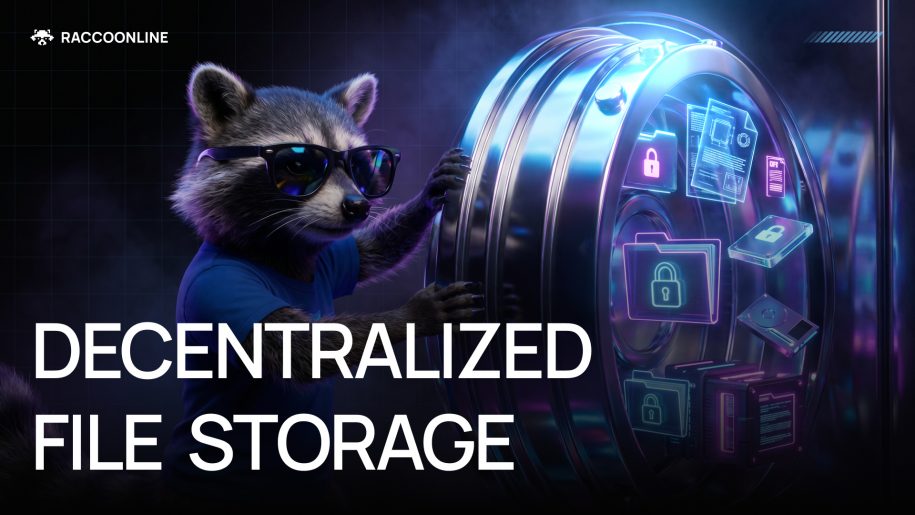
RaccoonLine today announced the availability of its built-in decentralized file storage (DFS) feature, integrated directly into the VPN product rather than offered as a separate service. The launch addresses a gap in the privacy stack that most VPN products leave open: traffic is protected, but files stored in centralized cloud services remain fully exposed to legal orders served on storage providers. More information is available at raccoonline.com.
Most VPN products protect one thing: internet traffic. Files stored Google Drive, Dropbox, or iCloud are held on servers owned by those companies, subject to their terms of service, their jurisdiction, and any legal orders those companies receive. The VPN encrypts the path but has no effect on where the data lives.
How Centralized Cloud Storage Works
When a file is stored on a centralized cloud platform, it lives on servers owned and operated by a single company. The company holds the encryption keys, or at minimum controls the infrastructure that manages them. The company can read the file if compelled to by legal order. It can suspend access. It can be hacked, losing user data in the process.
End-to-end encrypted cloud storage services address the key control problem. Providers like ProtonDrive or Tresorit encrypt files client-side before upload, so the company never holds the plaintext. This is a meaningful improvement. The remaining exposure is metadata and availability: even end-to-end encrypted centralized storage tells the provider which files exist, when they were accessed, and from which IP addresses.
How Decentralized File Storage Works
Decentralized file storage distributes files across a network of independent nodes rather than storing them on servers owned by a single company. Files are split into encrypted fragments, and those fragments are stored across multiple nodes simultaneously.
Retrieving a file requires assembling the fragments from whichever nodes currently hold them. No single node holds a complete file. No single operator can read the file contents because each operator holds only an encrypted fragment. No single company controls access. The architecture addresses both the key control problem and the availability problem. There is no central server to subpoena, hack, or shut down.
Why Combining DFS with a dVPN Matters
A VPN without decentralized storage creates a partial privacy perimeter. Traffic to websites is protected. Files stored in cloud services are not. An adversary who cannot intercept browsing traffic can still access documents through a legal order served on a cloud provider.
Combining decentralized file storage with a dVPN closes this gap. For users handling sensitive documents, journalistic sources, legal materials, or confidential business communications, the distinction between protecting traffic and protecting stored data is significant.
RaccoonLine’s Implementation
RaccoonLine’s built-in DFS is integrated directly into the product rather than offered as a separate service. Users accessing files through the DFS do so over the same P2P node infrastructure that handles their traffic routing. The access path and the storage location share the same privacy architecture. Neither the files nor the traffic patterns around accessing them are visible to any central party.
About RaccoonLine
RaccoonLine extends privacy coverage beyond traffic routing with built-in decentralized file storage. Files stored through the DFS system are fragmented across independent nodes rather than held on servers controlled by a single company. The product includes VPN clients for Windows, macOS, iOS, and Android. More information is available at raccoonline.com.